The mathematics of thermodynamics places restrictions on how certain thermodynamic curves must appear when they are graphed.
There is one curve that is often drawn incorrectly by beginners
and that is how
 changes with temperature at constant
pressure and composition.
Crusty old materials scientists are fond of
pointing out, when this particular mistake
is made,1 that knowing
how to take derivatives is important.
changes with temperature at constant
pressure and composition.
Crusty old materials scientists are fond of
pointing out, when this particular mistake
is made,1 that knowing
how to take derivatives is important.
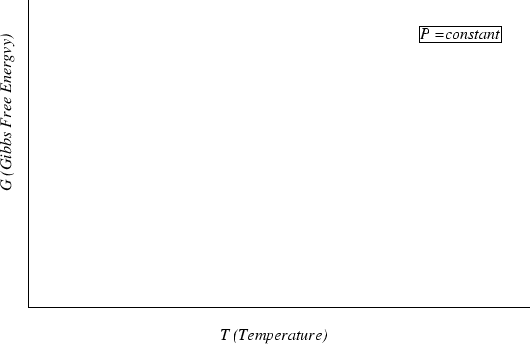
An example of the plot is given below:
First, what is the slope of this curve?
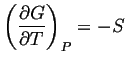 |
(23-1) |
Second, what is the curvature of the curve?
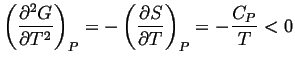 |
(23-2) |
Therefore the curve must appear as follows:
Please learn these rules for drawing curves for the future. Someone is likely to ask you how they are drawn--if you make this particular mistake, please say that someone else besides me taught you thermo...
Question: What if another phase is considered? How would it be drawn? What conclusions can be made from the graph?
 behave when only
  is changing?