The foundations of thermodynamics were developed in an era where steam engines and production of useful work were the most important issues. Joule was interested in motors and the original statement of the second law derives from Carnot who was trying to find limits on the efficiency of work cycles. I've avoided this approach of engines and cycles in these lectures because, today, the most interesting applications of thermodynamics apply to the equilibrium and near-equilibrium properties of material systems.
A short list of practical applications for which thermodynamics is the essential tool for understanding includes:
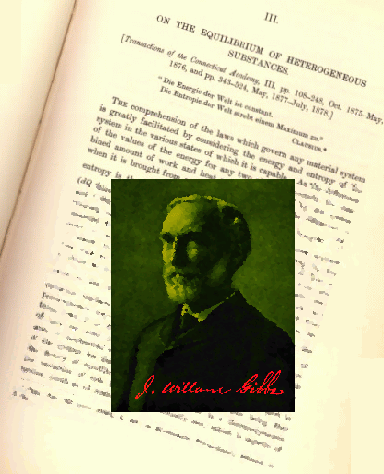
Our current understanding of equilibrium, derived from the second law of thermodynamics, derives from a remarkably accomplished paper written by Gibbs at the beginning of the twentieth century. We will begin by abstracting the first 10 pages of that 300-page paper.